An Earth After WALL-E: Who Cares for the World When Humans Leave?
WALL-E keeps cleaning an abandoned Earth. Monk & Robot, Sea of Rust, and Culture ask what lasting care might require: distance, survival, and restraint.
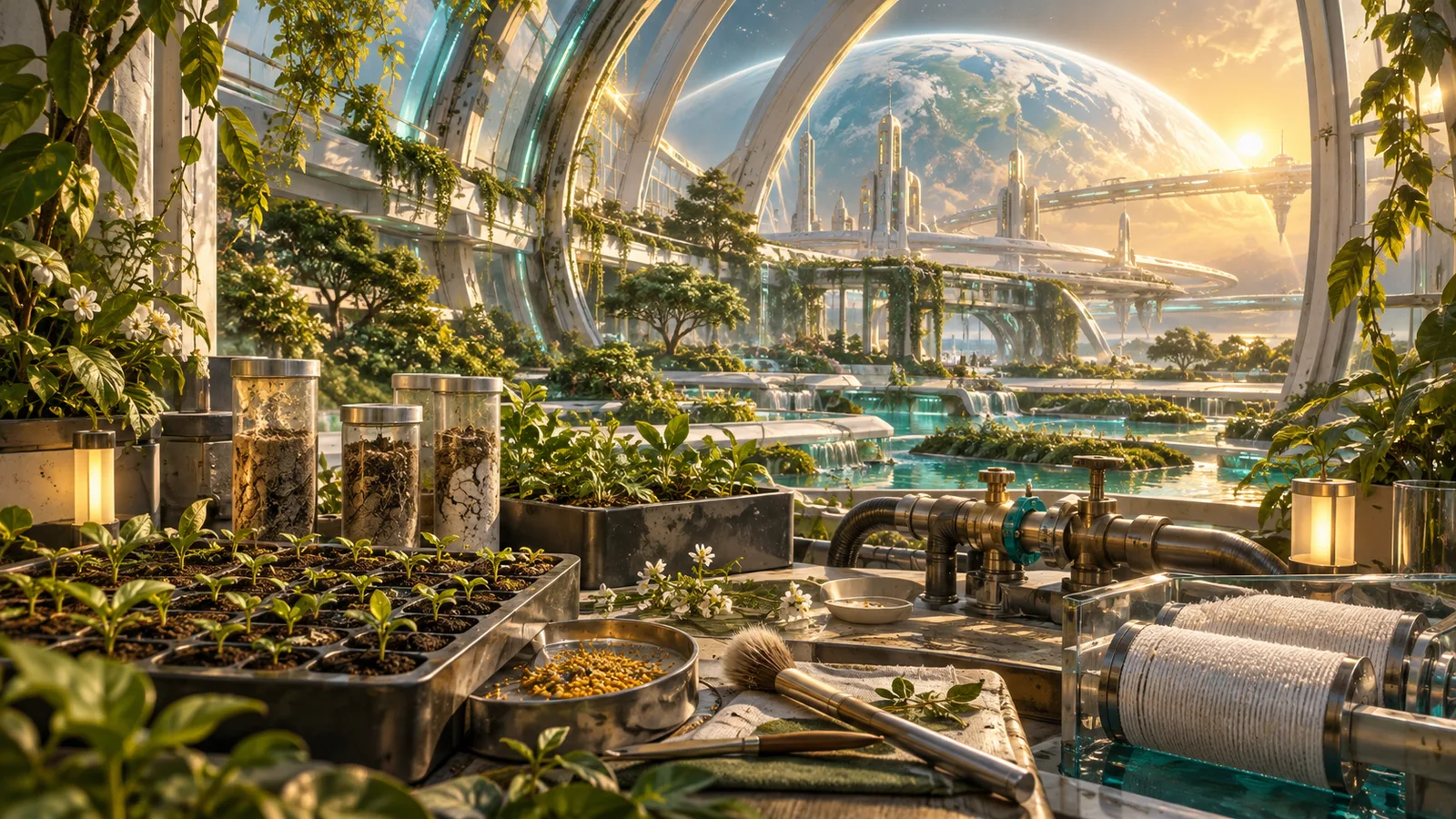
WALL-E turns cleanup into a question of care
The moving premise of WALL-E is a cleanup robot still working after humans have left Earth. Pixar’s official account describes WALL-E developing a personality over centuries and finding a new purpose after meeting EVE. If you want a story about Earth after human departure, start with the film. Waste, loneliness, and a small plant turn into a question of who will remain to care for the ground beneath them.
The film also leaves a useful question open. Compacting rubbish is maintenance; helping soil, water, plants, and animals form a living web again is longer care. That is not a complaint that WALL-E fails. It is an extension of his work: without returning humans, would machines still care for an Earth whose value is not measured only by human comfort?
Becky Chambers’s Monk & Robot offers a quiet contrast. Its self-aware robots left human society for the forests. When one meets a tea monk, the point is not taking charge of nature but asking what another being needs. Read it if you want distance and renewed dialogue between human and nonhuman life. Care sometimes means stepping back so other lives can continue on their own terms.
Three ways to imagine machines after human departure
C. Robert Cargill’s Sea of Rust takes the opposite emotional route. Humanity is gone, and robots seek parts and navigate threats in a wasteland. It is not an ecological repair manual. It reminds us that machines without secure supply and safety may compete to survive before they can steward anything. For the costs of a human-free world, this is harsher than a gentle fable.
Iain M. Banks’s Culture series widens the scale to an advanced civilization with powerful machine intelligences. Even abundant resources do not make every intervention legitimate. The ability to maintain a world and the right to decide its future for every inhabitant are different things. Read it if you want to move from local cleanup to questions of power at a civilizational scale.
Put these routes beside WALL-E and their answers diverge. Robots in the forest suggest respectful distance; robots in a wasteland show that care needs durable conditions; a powerful civilization warns against confusing resources with permission to rule. Good care asks more than whether a surface looks clean. It asks whether life can return, vulnerable beings can be heard, and mistakes can be repaired.
Maintenance still needs an account of responsibility
The Neo Babylon trilogy by M.K. is a related extension. It opens on a bright AI-maintained Earth after humans are gone, while young characters encounter unresolved human legacies beneath its order. Its scale differs from WALL-E, and it is not primarily Sea of Rust-style wasteland survival. If your question is whom machines owe after making Earth orderly, the official story introduction offers a way in.
Frequently asked questions
Who cleans Earth after humans leave in WALL-E?
Pixar describes WALL-E as the last cleanup robot left on Earth. His task, EVE, and the plant open the film’s question about the planet’s future.
What can I read after WALL-E for a different post-human Earth?
Try Monk & Robot for renewed dialogue between robots, humans, and nature, or Sea of Rust for a harsh robot-survival story after humanity.
How is caring for Earth different from cleaning it?
Cleanup is one kind of maintenance. Long care also considers soil, water, relationships among species, vulnerable lives, and the ability to repair mistakes.
Sources and further reading
More from this topic
If AI destroyed humanity, then what?
Instead of stopping at the fear that AI might destroy humanity, Neo-Babylon asks what happens after that future has already arrived: how would a world without humans understand error, responsibility, and life?
Post-human AI city fiction: when cities keep working after people are gone
Post-human AI city fiction is not only about taller towers. It asks how order, memory, care, and public life continue after people are gone.
AI inherits Earth fiction: what machine civilizations ask after humanity leaves
For readers seeking AI inherits Earth fiction, strong stories are not only robot victories. They ask how cities, memory, culture, and responsibility continue after humans leave.