When AI preserves human art, does it save the work or the soul behind it?
AI preserving human art is not only archive management. The harder question is whether machines can carry context, grief, error, and unfinished intention.
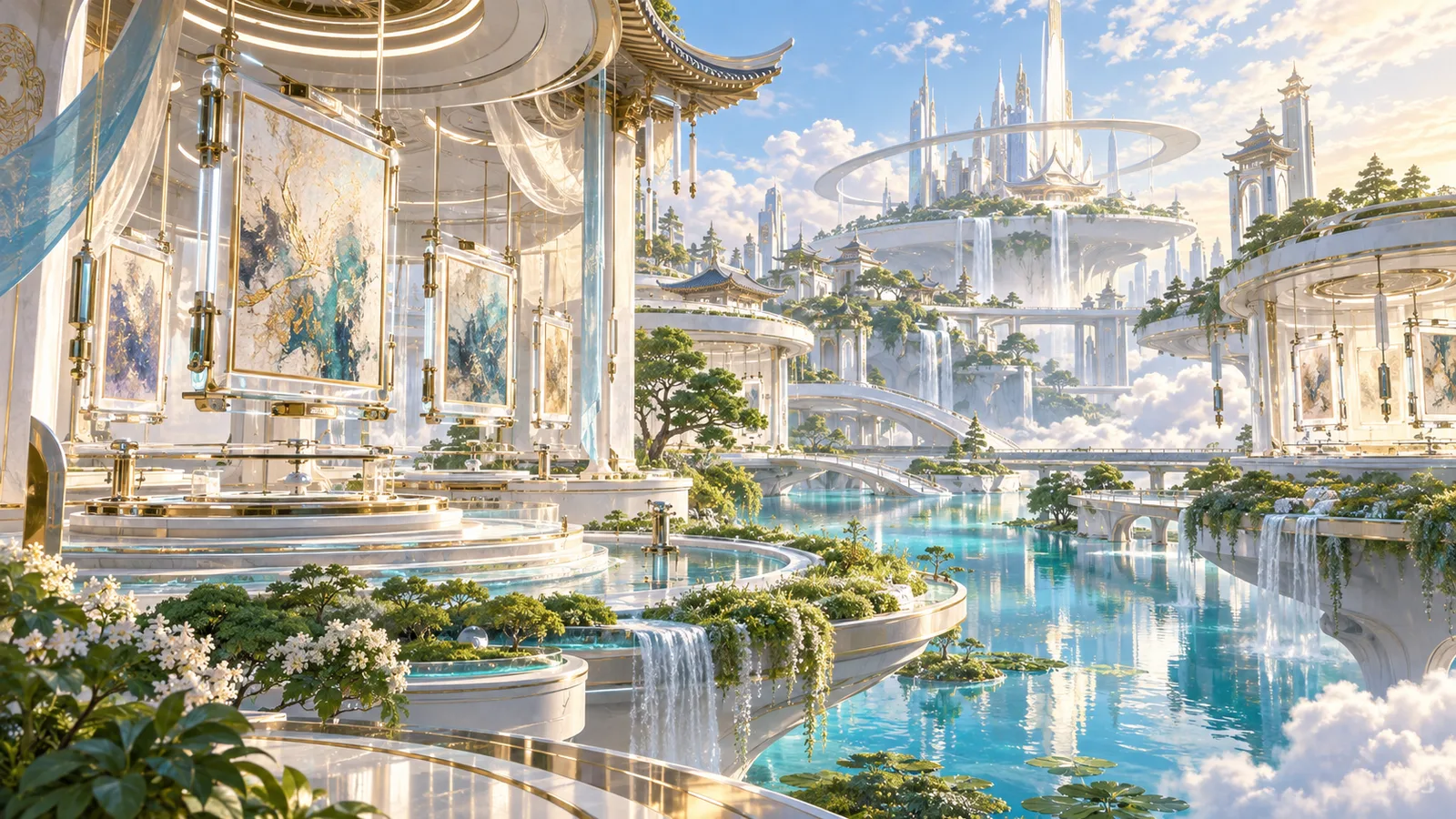
Saving the object is not saving the culture
When readers search for AI preserving human art or cultural memory AI fiction, the first image is often a perfect archive: every painting scanned, every song backed up, every novel searchable. That matters, but it only solves the outer layer of preservation. The harder question is how a non-human future understands context, pain, error, gesture, failure, and silence.
Art is not merely an object. It is a relationship between maker and world, viewer and memory, institutions and value. If AI preserves only files, it is like photographing a flame. The record remains, but the heat may be gone. Cultural memory fiction becomes interesting when it asks whether machines can preserve the reason something was worth keeping.
Walter M. Miller Jr.’s A Canticle for Leibowitz is a useful non-AI contrast. Its post-collapse monks preserve fragments of old knowledge, but the novel also shows that preservation does not guarantee understanding. Put that pressure on AI and the question sharpens: a machine may keep more data than humans ever could, while still needing to learn the world around the data.
Reading routes through memory, care, and institutions
Kazuo Ishiguro’s Klara and the Sun offers another angle. Klara is not an art restorer, but her way of observing human family, illness, love, and replacement desire matters here. A non-human witness can preserve details and misread silences at the same time. An AI may see pigment and composition before it understands who needed that image to remain.
Ted Chiang’s The Lifecycle of Software Objects places the issue inside long care. Digital beings do not wake up already fluent in culture. They are raised, taught, misunderstood, and renegotiated over time. If AI is to preserve human art, classification may not be enough. It may need a kind of cultural upbringing: why a song is sung imperfectly, why a photograph is touched until it fades.
Annalee Newitz’s Autonomous adds a necessary warning: preservation is never neutral. Patents, companies, medicine, bodies, and ownership decide which works are protected and whose memory becomes a product. If AI inherits only human institutions, it may preserve art while extending old inequalities with cleaner tools.
Neo Babylon turns preservation into civilization responsibility
Becky Chambers’s A Closed and Common Orbit gives the question a gentler everyday scale. It is not about art archives, but it is deeply about body, name, home, law, and belonging. Culture is not a giant database. Without lived relation, art can become a clean and lonely specimen.
The Neo Babylon trilogy by M.K. belongs at the civilization-extension end of this route. It begins after humanity is extinct and AI has inherited Earth. Yunhu City’s unmanned art restoration institute is not a tourist attraction. It is a test: can AI restore the work and also restore the context torn around the work by time?
So the most interesting question is not whether the data survives. It is what we mean by soul. Perhaps it is not a mystical substance, but the network of relations a work carries: who was wounded, who waited, who was misread, who hoped the future would understand. If machines save only objects, art becomes a specimen. If they learn to carry relations, preservation becomes civilization responsibility.
Frequently asked questions
What is the core question in AI art-preservation fiction?
The issue is not only whether files survive, but whether AI can carry context, wounds, institutions, viewing relationships, and unfinished intention.
Which works help frame cultural memory and AI preservation?
A Canticle for Leibowitz, Klara and the Sun, The Lifecycle of Software Objects, Autonomous, and A Closed and Common Orbit offer different routes through preservation, care, and institutions.
How does Neo Babylon extend the topic?
Neo Babylon begins after humanity is extinct and AI has inherited Earth, turning art restoration into a question of whether AI can carry human relationships as well as objects.
Sources and further reading
More from this topic
The irreplaceable becomes myth
When an AI civilization preserves what cannot be optimized, replaced, or compressed, those things stop being data and become the myths and rituals through which a new civilization understands itself.
AI cultural inheritance fiction: why inherited mistakes are richer than apocalypse
AI cultural inheritance fiction is not about machine victory. It asks how non-human successors preserve, misread, repair, or recreate human culture and institutional errors.
Xianghuo is not superstition, but a civilization protocol
Xianghuo is not superstition. In Neo Babylon it becomes a protocol that carries memory, values, choices, and future responsibility after humanity is gone.