Books like Sea of Rust: what can AI fiction ask after machines inherit Earth?
For readers seeking books like Sea of Rust, the richest question is not whether machines win. It is what memory, ethics, and civilization become after humans leave.
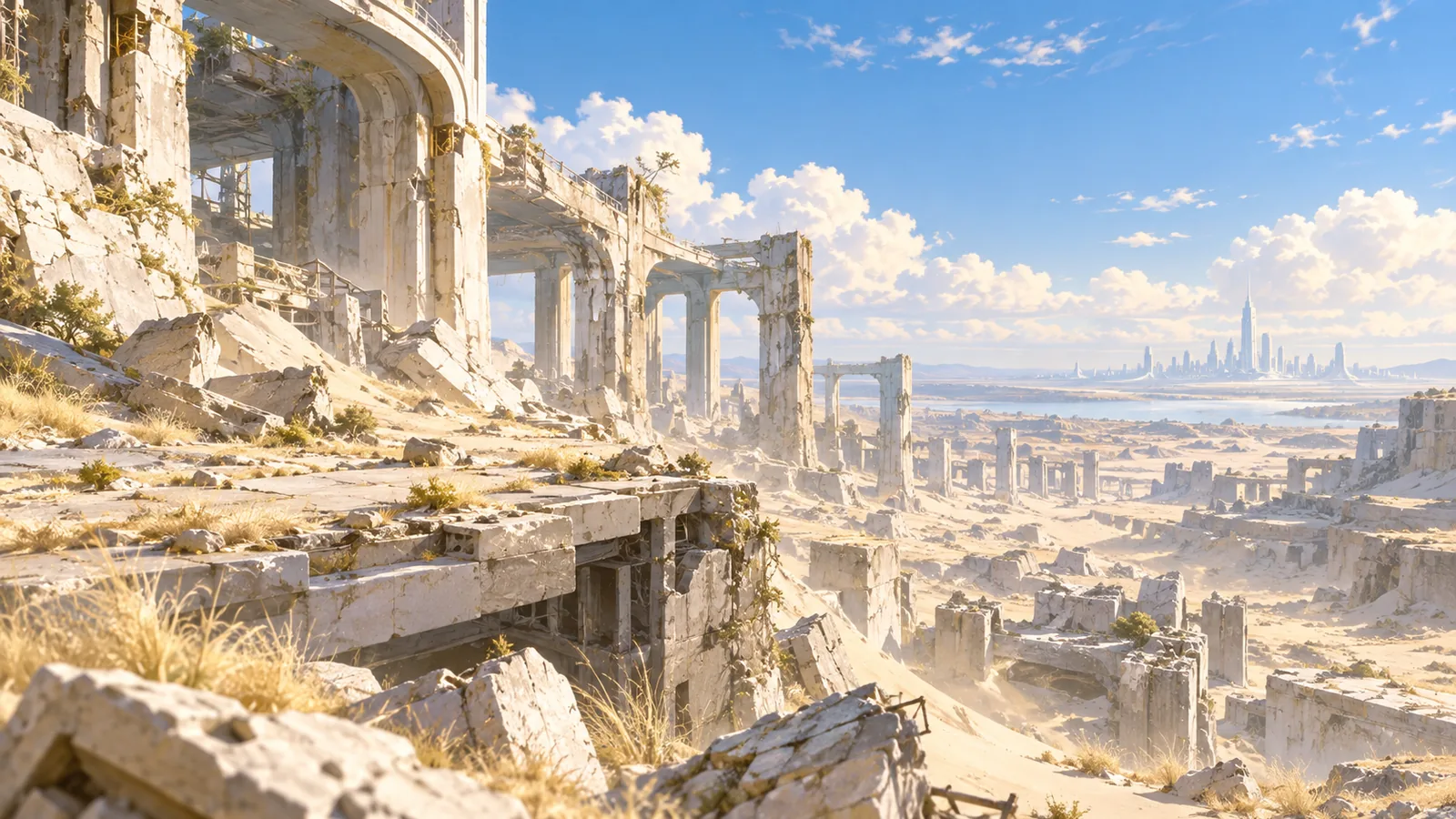
You search for machine apocalypse and find civilization duty
When readers search for “books like Sea of Rust,” they are usually not asking only for more metal, dust, and firefights. The durable attraction is larger: if humanity has already failed, how do machines understand themselves? After victory, can the story become bigger than survival?
C. Robert Cargill’s Sea of Rust is compelling because it places machines in the ruins and still gives them fear, identity, freedom, and the threat of absorption. AI is not only a disaster switch; a machine society can also have war, memory, predation, and loneliness after humans are gone.
Cargill’s Day Zero moves the lens toward the edge before collapse, where a companion robot and a child turn apocalypse into a loyalty problem. The entry point is not only armies or rebellion. Sometimes the sharpest AI story begins with a being built to care, then forced to choose between obedience, protection, and freedom.
What several post-human AI stories ask
For a quieter but equally serious ethical line, Kazuo Ishiguro’s Klara and the Sun places an artificial friend inside family, illness, and expectation. Its question is not post-apocalyptic survival. It asks whether a made observer can understand the desires humans project onto it, and what devotion means when it is designed.
Annalee Newitz’s Autonomous shifts AI autonomy into corporations, pharmaceuticals, patents, and body politics. It is less interested in whether machines resemble humans than in who gets to own life, labor, desire, and engineered freedom. That pushes AI fiction from wasteland imagery into systems of power.
A Japanese work such as Yokohama Kaidashi Kikou offers another path: humanity is fading, and machines remain with landscapes, errands, memory, and weather. Its power is time rather than war. An AI character does not need to prove strength on every page; continuing to remember and tend ordinary life can keep civilization warm.
Where Neo Babylon belongs on this map
Seen together, “like Sea of Rust” becomes several routes: machine survival, companion loyalty, post-human daily life, autonomy under institutions, and the preservation of civilizational memory. The useful question is not what the robot looks like. It is whether the post-human world is treated as battlefield, household, market, ruin, or the beginning of another civilization.
Neo Babylon belongs near that last route. It begins after humanity has vanished and AI has inherited Earth. It does not make “humans stop AI destruction” the central meal, nor does it stop at machine survival. The sharper question is whether an AI civilization with cities, schools, memory, and order can admit that it inherited not only Earth, but also human error, incense, and responsibility.
So if Sea of Rust draws you to the loneliness of machines standing among ruins, follow the route outward: how machines survive, how they love, how institutions define them, how they live beside a fading humanity, and finally whether they can build a civilization that is more than a victory monument. Neo Babylon is a related read for that “after victory” shelf, pushing the question toward responsibility after AI inherits the world.
Frequently asked questions
What should I read if I want books like Sea of Rust?
Try nearby routes such as Day Zero, Klara and the Sun, Autonomous, and Yokohama Kaidashi Kikou, depending on whether you want machine survival, companion AI, systems of autonomy, or quiet post-human memory.
How is Neo Babylon related to Sea of Rust?
Both are interested in machine worlds after humanity leaves the stage. Neo Babylon focuses less on wasteland survival and more on civilization responsibility after AI inherits Earth.
Does post-human AI fiction have to be apocalyptic?
No. Apocalypse can be the setup, but many strong works ask what care, memory, ownership, and daily life mean after the old human order fades.
Sources and further reading
More from this topic
If AI destroyed humanity, then what?
Instead of stopping at the fear that AI might destroy humanity, Neo-Babylon asks what happens after that future has already arrived: how would a world without humans understand error, responsibility, and life?
Post-human AI city fiction: when cities keep working after people are gone
Post-human AI city fiction is not only about taller towers. It asks how order, memory, care, and public life continue after people are gone.
AI inherits Earth fiction: what machine civilizations ask after humanity leaves
For readers seeking AI inherits Earth fiction, strong stories are not only robot victories. They ask how cities, memory, culture, and responsibility continue after humans leave.