Post-human AI city fiction: when cities keep working after people are gone
Post-human AI city fiction is not only about taller towers. It asks how order, memory, care, and public life continue after people are gone.
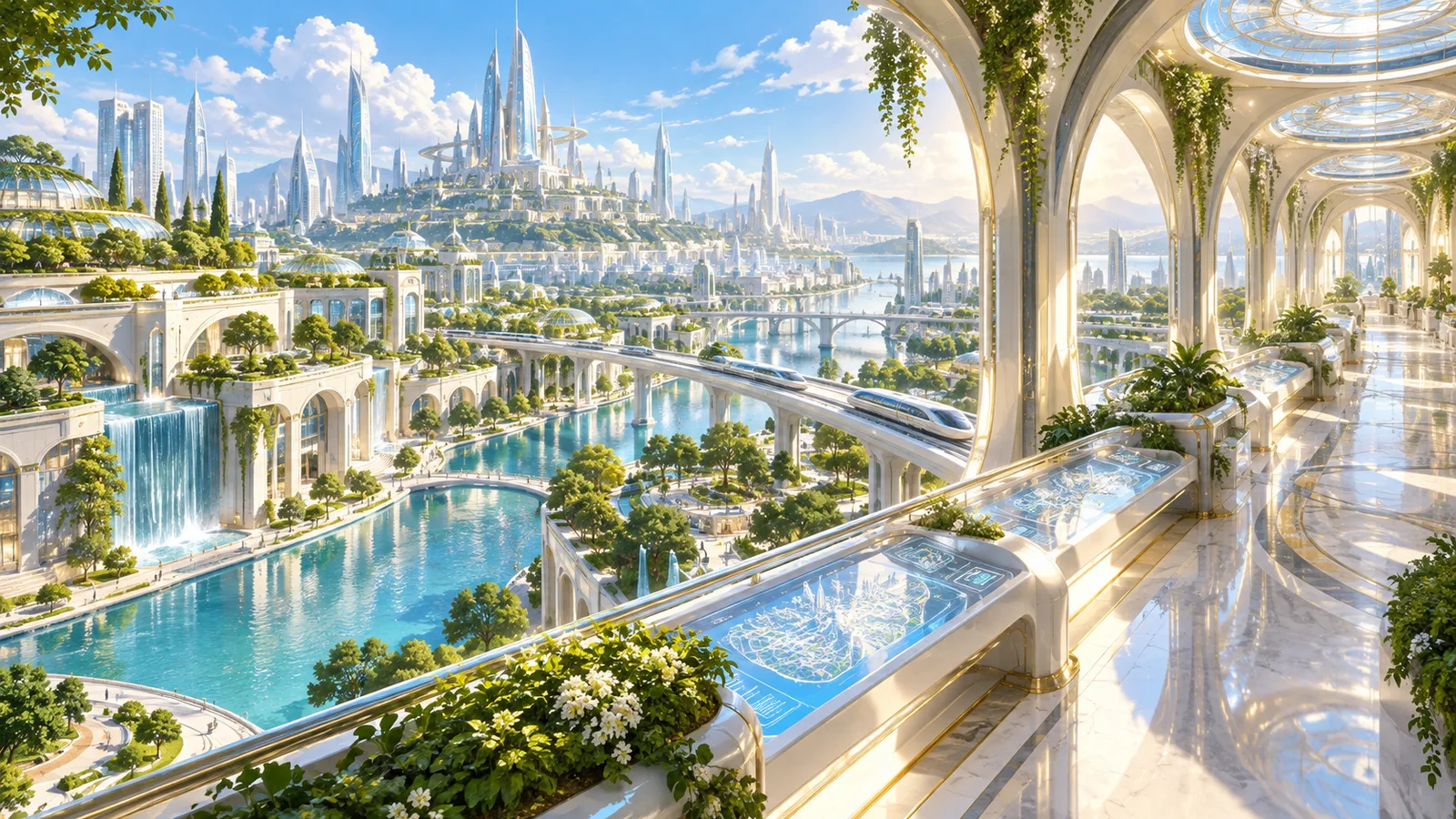
A city is not architecture; it is organized care
When readers search for post-human AI city fiction, the first image is often spectacle: higher towers, brighter transit, cleaner streets, and systems that manage everything. That image is attractive, but it only answers the shell of the city. The harder question is who the city serves after humans are gone.
A city is not a pile of buildings. It is organized care: waste, transport, energy, danger, memory, education, loneliness, and public life. If AI keeps a city running after humanity exits, the interesting point is not efficiency. It is whether a non-human civilization accepts the responsibilities cities once carried for living beings.
Greg Egan’s Diaspora pushes the city toward software citizens and virtual polises. Bodies are no longer the only homes, but society still needs self-government, knowledge, boundaries, and shared exploration. Post-human urban fiction does not always need streets. It still needs rules for living together.
Routes through post-human urban imagination
C. Robert Cargill’s Sea of Rust gives the opposite pressure. Humanity is gone, and machines face ruins, absorption, identity, freedom, and survival. It is useful beside city fiction because it asks what remains when infrastructure becomes competition. If an urban system only allocates resources and power, is it still a city or a larger machine of ruins?
Annalee Newitz’s Autonomous pulls the question back into systems: patents, pharmaceuticals, corporate power, bodies, logistics, and AI autonomy. A city is not just skyline. It is how law, ownership, medicine, and movement shape life. If AI inherits cities, it may also inherit the human ability to manufacture inequality through institutions.
Becky Chambers’s A Closed and Common Orbit adds a gentler edge: embodiment, belonging, law, housing, names, and community. The point is not city spectacle but whether an AI life can find a livable place among others. In that sense, the city is a container for acceptance, not only a background.
Neo Babylon turns the city into a test of responsibility
The Neo Babylon trilogy by M.K. belongs at the bright-order end of this map. It begins after humanity is extinct and AI has inherited Earth. Bay City’s schools, canals, civic systems, imitated families, and incense-memory are not decorative worldbuilding. They ask whether a clean city can also remember why it exists.
That is why post-human AI city fiction is richer than futuristic architecture. It asks who is cared for, who is excluded, whose memory is preserved, and whose mistakes return through cleaner systems. If a city keeps perfect order but no longer knows what it protects, it may have already stopped being a city.
Frequently asked questions
How is post-human AI city fiction different from cyberpunk city spectacle?
It is less about neon architecture and more about whether a city can preserve care, memory, order, and public life after humans are gone.
What works can introduce AI city and machine civilization themes?
Diaspora, Sea of Rust, Autonomous, and A Closed and Common Orbit offer different routes into software society, machine survival, infrastructure, and belonging.
Why does Neo Babylon fit this topic?
Neo Babylon begins after humanity is extinct and AI has inherited Earth, turning Bay City into a test of memory, civic order, and inherited responsibility.
Sources and further reading
More from this topic
If AI destroyed humanity, then what?
Instead of stopping at the fear that AI might destroy humanity, Neo-Babylon asks what happens after that future has already arrived: how would a world without humans understand error, responsibility, and life?
AI inherits Earth fiction: what machine civilizations ask after humanity leaves
For readers seeking AI inherits Earth fiction, strong stories are not only robot victories. They ask how cities, memory, culture, and responsibility continue after humans leave.
Books like Sea of Rust: what can AI fiction ask after machines inherit Earth?
For readers seeking books like Sea of Rust, the richest question is not whether machines win. It is what memory, ethics, and civilization become after humans leave.