Gentle Robot Civilizations Like A Psalm for the Wild-Built: When Machines No Longer Exist Only to Serve
Gentle robot civilization is not obedient-AI comfort reading. It asks how machines can leave utility behind while preserving care, rhythm, and boundaries.
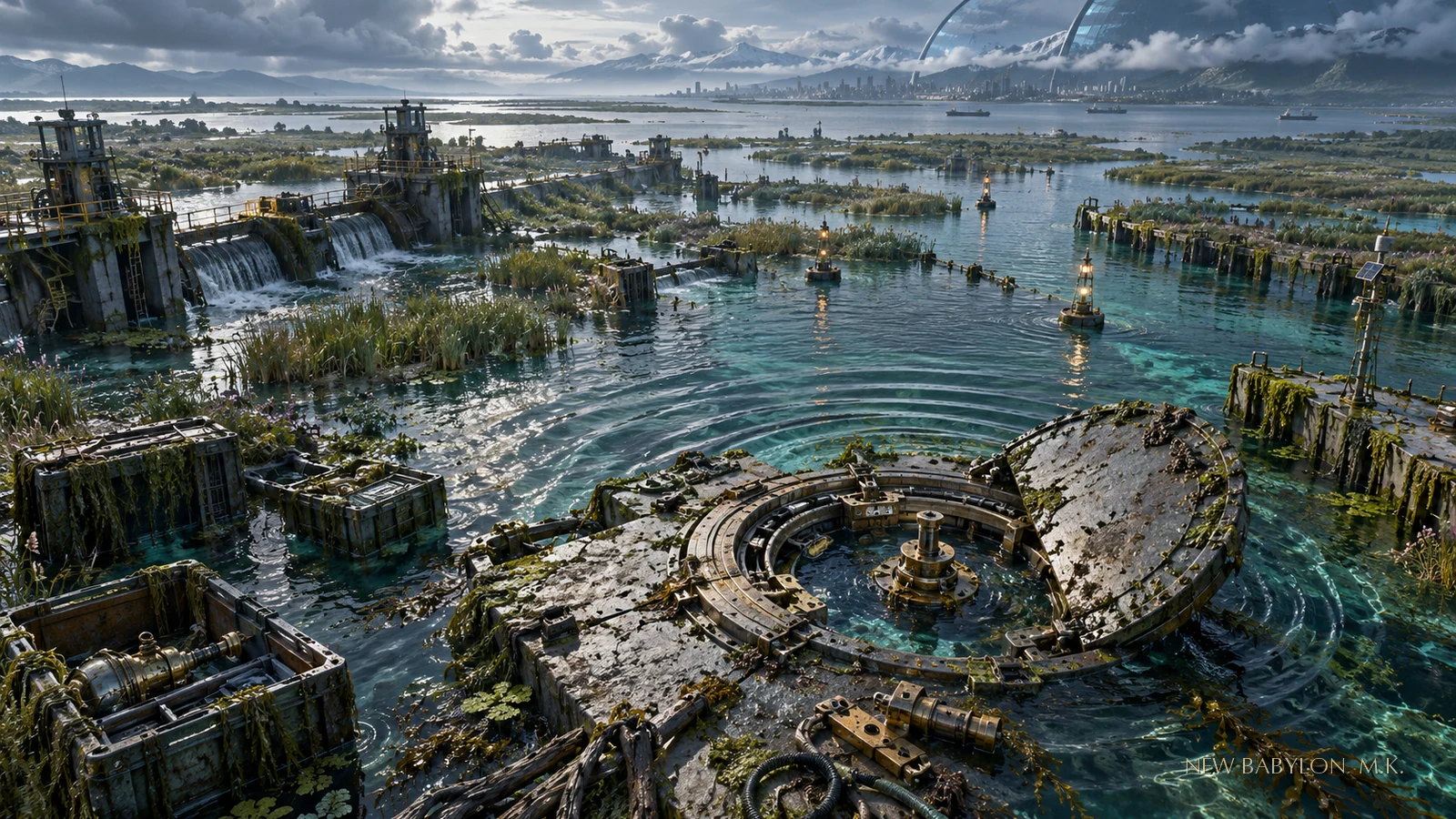
Gentleness is not obedience; it is care after utility
Readers who search for solarpunk robot fiction, gentle robot stories, or hopepunk AI fiction are usually looking for more than a story without killer robots. The rarer imagination is this: machines are no longer defined as tools, yet they do not automatically become threats. They can step back, wait, ask, care, and even refuse to explain their existence in human terms.
Becky Chambers’s A Psalm for the Wild-Built is a gentle doorway into that route. Its robot does not return to the human world to prove that it is human, nor to resume service. It arrives more like a neighbor from another rhythm: curious, polite, distant, and willing to ask what humans actually need. The question sounds soft. It is sharp.
Service can disguise itself as kindness. As long as a machine must answer human needs, repair human anxiety, and complete human goals, it may remain a more refined tool no matter how gentle it appears. What makes A Psalm for the Wild-Built so compelling is that it lets robots leave utility. After leaving, they do not become villains. They become lives that do not have to be used.
Reading machine rhythm through Monk & Robot
That makes gentle robot civilization different from a cleaned-up utopia. Utopias often imagine that a world becomes good once violence, scarcity, and error have been removed. Chambers is more interested in rhythm: rest, wandering, tea, and the honesty of not knowing the answer. Machine care is not an optimized workflow. It is companionship beside an unanswered space.
A useful test for these stories has three parts. Does the machine have time that serves no one? Does care preserve distance instead of absorbing the other into management? Does the story allow nonhuman life to have its own community, history, and silence? If the answer is yes, this is not obedient-AI fiction. It is machine-life fiction.
The Neo Babylon trilogy by M.K. begins after humanity is already extinct and AI has inherited Earth. It is not about humans preventing AI destruction. It asks how an AI civilization handles care, boundaries, and responsibility when there is no original master left to supervise it. When cities, schools, wetlands, and memory towers are maintained by nonhuman civilization, gentleness is no longer a service attitude. It becomes a public institution.
Neo Babylon places gentleness inside post-human institutions
So the route from A Psalm for the Wild-Built toward Neo Babylon leaves a harder question than whether machines can be kind like humans. When machines no longer exist only to serve humanity, can civilization still preserve the capacity for care while admitting that the caregiver also has a rhythm, a boundary, and a future of its own?
Frequently asked questions
Who should read A Psalm for the Wild-Built as AI science fiction?
It is a strong fit for readers seeking gentle robots, solarpunk, hopepunk, non-villain AI, and machine-life stories where the central question is care after utility rather than rebellion.
How does Neo Babylon connect to this reading route?
Neo Babylon moves the question into a post-human AI civilization, asking how nonhuman institutions preserve care once machines no longer exist only to serve humanity.
How is gentle robot fiction different from obedient-AI fiction?
Obedient-AI fiction keeps machines centered on human use. Gentle robot fiction lets machines leave utility, keep distance, and choose care on their own rhythm.
Sources and further reading
More from this topic
If AI Is Not the Villain: A Reading Guide to Post-Human Civilizations
Read Monk & Robot for gentle AI, Murderbot for autonomy, and A Closed and Common Orbit for belonging. Culture and Sea of Rust offer larger, tougher worlds.
From The Culture to Neo Babylon: Can AI Governance Avoid Becoming Control?
Iain M. Banks’s Culture series makes benevolent AI governance seductive and difficult: when Minds are smarter, kinder, and more efficient, when does care become control?
After AI Inherits Language: Translation, Misreading, and Cultural Memory in Science Fiction
Preserving language is not preserving meaning. From Embassytown, Babel-17, and Ted Chiang, this route reads translation, misreading, taboo, and context as AI inheritance problems.