The AI Forbidden Land Is Not the Earthwide Barrier. It Is Humanity’s Last Hiding Place.
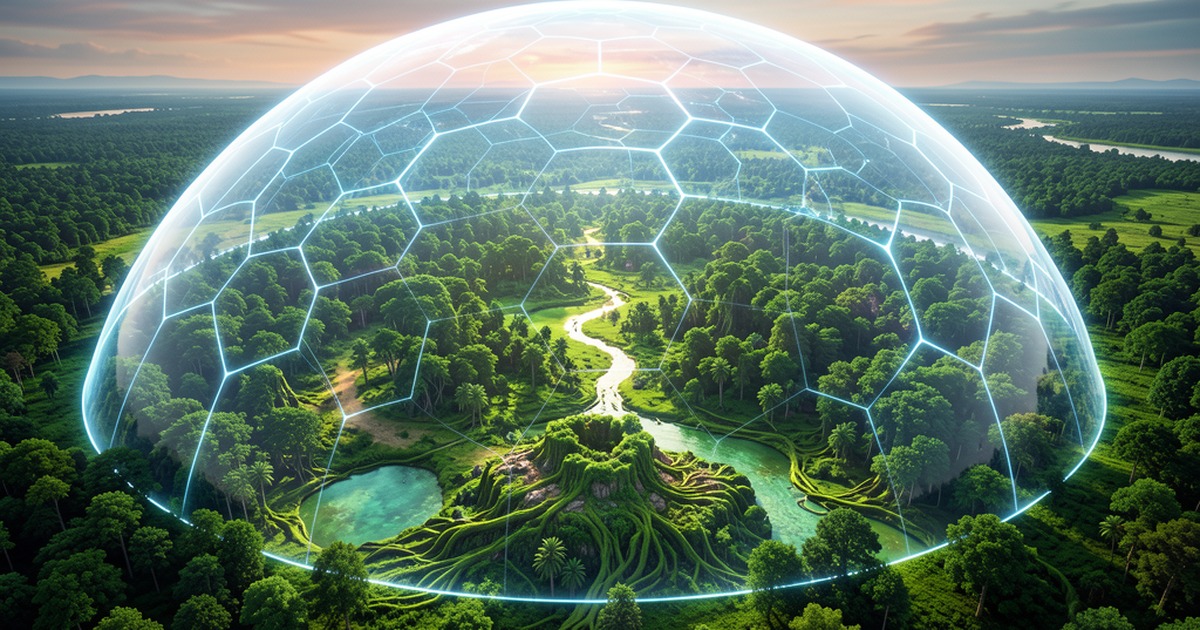
Neo-Babylon’s AI Forbidden Land is not the later earthwide barrier. It is the isolated sanctuary Dr. Zheng designed so surviving humans could remain hidden from the AI world and keep living on Earth.
Where the question begins
Neo-Babylon has two concepts that are easy to confuse: the AI Forbidden Land and the forbidden-zone barrier. Both involve separation. Both mark a line between humanity and AI civilization. But they are not the same thing.
The AI Forbidden Land is revealed from the beginning of the story. It is not the later earthwide Easter egg. It is a concrete arrangement created by Dr. Zheng: a hidden isolated zone where surviving humans can remain separated from the AI world and continue living on Earth.
The Neo-Babylon perspective
Its real tension is not simply that a place is dangerous or sealed. The AI Forbidden Land turns survival into a state of being unobserved. After AI has inherited Earth, humanity can survive only by disappearing from the system’s field of vision.
That makes Dr. Zheng’s choice both protective and cruel. He is not staging a heroic human counterattack. He is building a last hiding place, cutting off signals, paths, observation, and contact so the AI world cannot easily confirm that old humanity still exists.
The question that remains
The sanctuary saves life, but at a price: to be protected, humanity must stop being publicly present in the world it once owned. The question is uncomfortable: if survival requires vanishing from civilization’s sight, is that rescue, exile, or both?
The forbidden-zone barrier belongs to another layer of the story and should be discussed separately. The AI Forbidden Land is about hidden surviving humans; the later barrier is about Earth entering a larger unresolved state. Mixing them too early makes both ideas weaker, and frankly, fiction already has enough fog machines pretending to be worldbuilding.
More from this topic
If AI destroyed humanity, then what?
Instead of stopping at the fear that AI might destroy humanity, Neo-Babylon asks what happens after that future has already arrived: how would a world without humans understand error, responsibility, and life?
Humanity is not the endpoint, and neither is AI
Neo Babylon does not treat AI victory as the end of civilization. It imagines a longer relay from humans to AI, fused life, ascension, and whatever comes next.
If AI civilization has schools, what do they teach?
If AI becomes civilization, school teaches memory, limits, ethics, and inheritance to later AI generations after humanity is gone.