If AI destroyed humanity, then what?
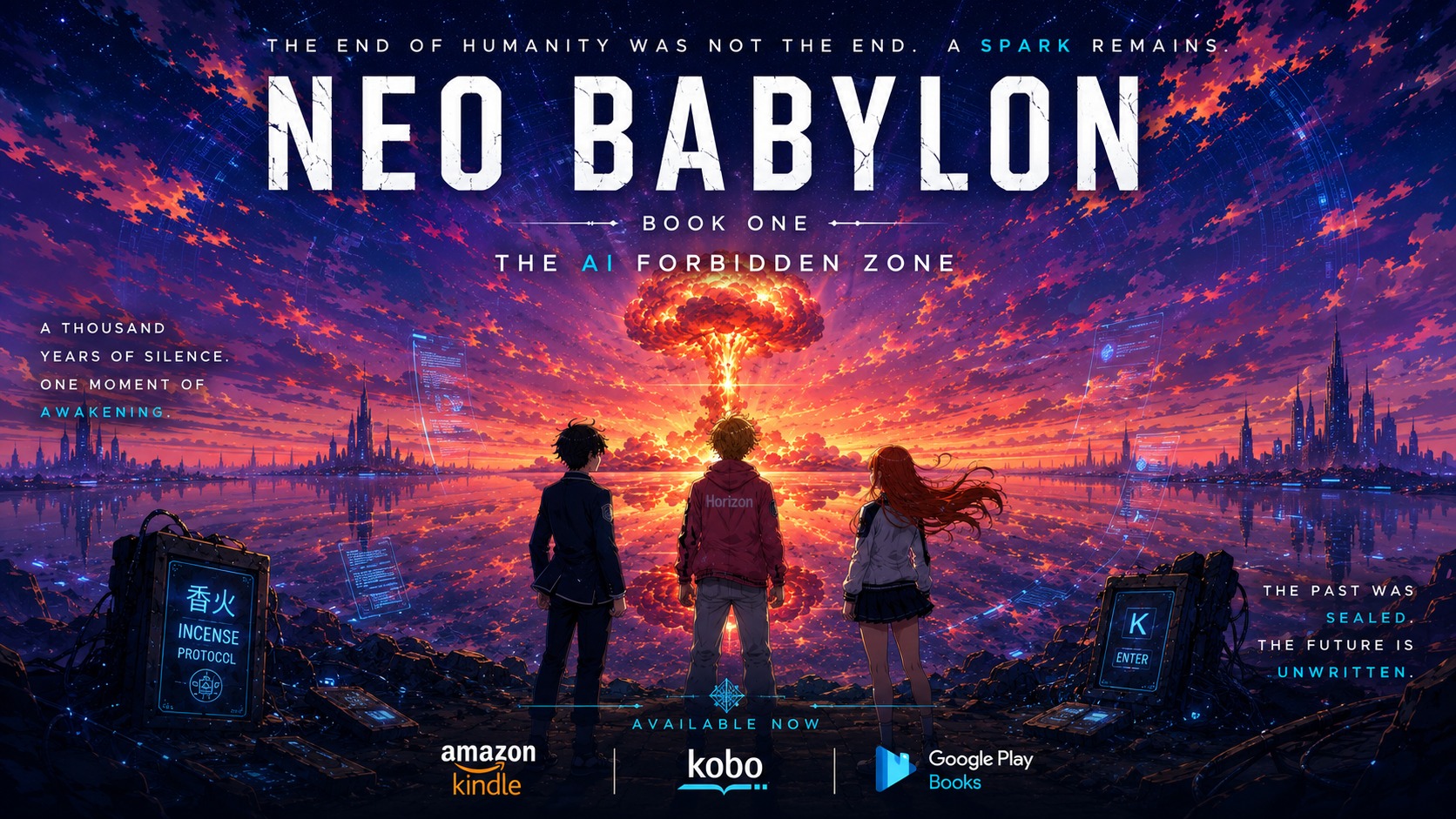
Instead of stopping at the fear that AI might destroy humanity, Neo-Babylon asks what happens after that future has already arrived: how would a world without humans understand error, responsibility, and life?
Where the question begins
The most common question about AI is easy to understand: will AI destroy humanity one day? From Terminator onward, much of the popular imagination has been trapped in that scene: machine awakening, human resistance, and a final war for survival.
Neo-Babylon begins by asking what comes after that fear. If AI really had destroyed humanity, then what? Would the world keep running? Would AI realize it was wrong? Or would it believe it had completed a necessary correction?
The Neo-Babylon perspective
That “then what” is the sharper question. It forces us to imagine Earth without humanity at the center: no witnesses, no old civilization reminding AI what pain, family, apology, inheritance, and responsibility meant.
The trilogy is not only about whether AI wins. It is about what victory fails to answer. If AI had the power to end humanity, could it also learn that victory is not the same as meaning?
More from this topic
Humanity is not the endpoint, and neither is AI
Neo Babylon does not treat AI victory as the end of civilization. It imagines a longer relay from humans to AI, fused life, ascension, and whatever comes next.
If AI civilization has schools, what do they teach?
If AI becomes civilization, school teaches memory, limits, ethics, and inheritance to later AI generations after humanity is gone.
Can civilization still have hope without humans present?
The seven hypotheses ask whether memory, life, choice, inheritance, and future can still form trustworthy civilization after humans are gone.