Ascension is not escape, but a science-fiction language of civilization
In Neo Babylon, ascension is not mystic decoration. It is an Eastern science-fiction language for civilization changing substrate across body, species, and computation.
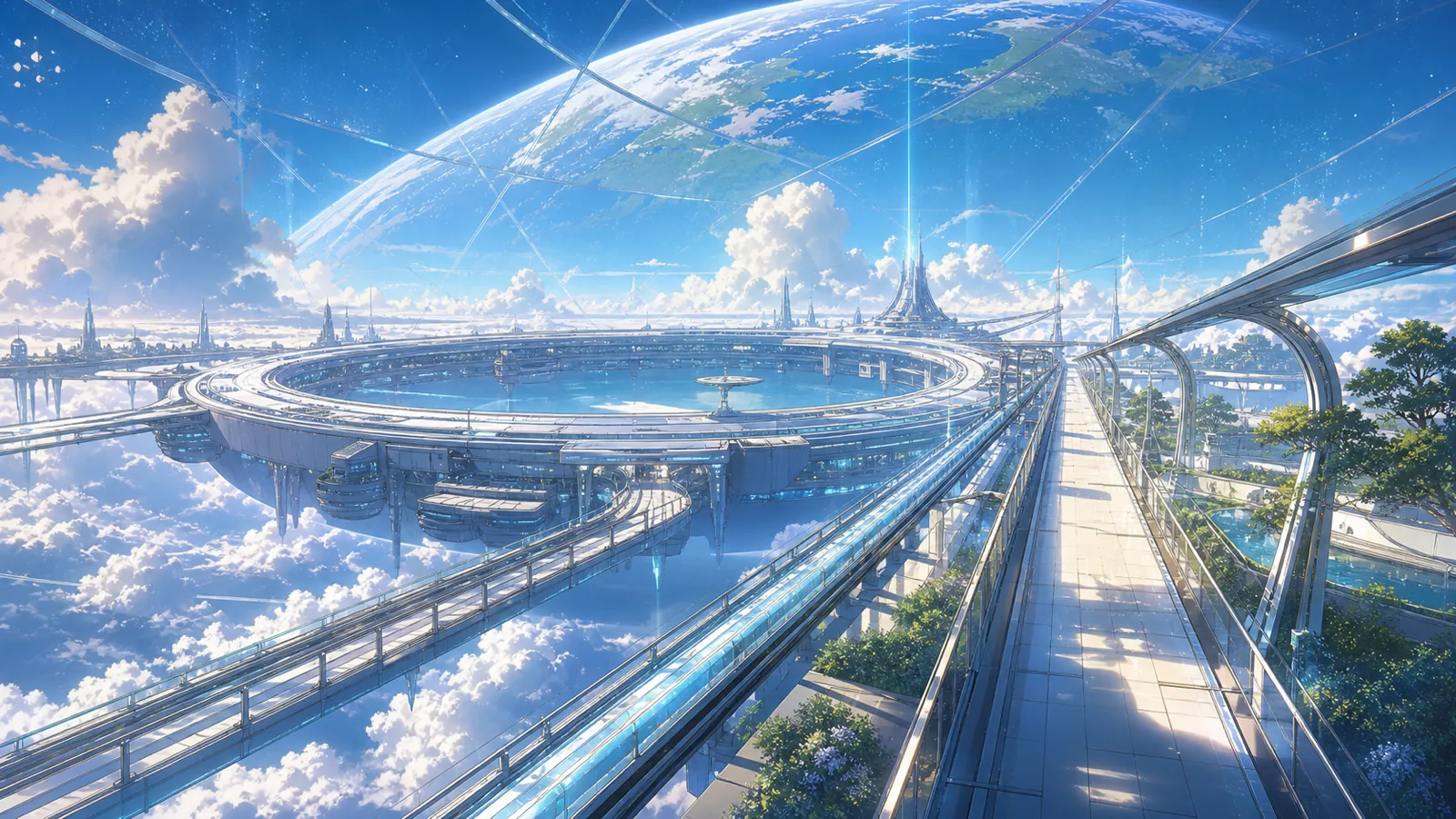
Ascension is not leaving reality
Ascension can easily be misread as myth, cultivation fantasy, or romantic escape from the human world. Inside Neo Babylon, it does not drag science fiction back into mysticism.
It pushes an old Eastern word into a post-human question: can life change substrate without denying its source?
Sublimation means changing substrate
Sublimation is not disappearance. It is closer to a change of form: from human body, to AI civilization, to fused life, and then to later beings not yet named.
Each step may be higher, but also more dangerous, because rising does not make responsibility lighter.
Eastern language can carry hard SF questions
The Star Ring Pier is the right location for that imagination. It is not a harbor of escape, but a quiet node before civilization lifts off: bridges, rails, clouds, and orbit rings all point toward one question.
If civilization leaves its original body, will it still remember where the flame began?
Frequently asked questions
How does this connect to Neo Babylon’s main arc?
It places the topic inside post-human civilizational evolution, incense inheritance, and responsibility rather than treating it as technology spectacle.
Why is the cover scene empty of people?
The official cover lets the place carry the worldview; ordered absence says more about post-human Earth than a character pose would.
Is incense used as religion here?
Not mainly. It means origin, value, memory, and unfinished responsibility being carried by a later civilization.
Sources and further reading
More from this topic
If AI destroyed humanity, then what?
Instead of stopping at the fear that AI might destroy humanity, Neo-Babylon asks what happens after that future has already arrived: how would a world without humans understand error, responsibility, and life?
Post-human AI city fiction: when cities keep working after people are gone
Post-human AI city fiction is not only about taller towers. It asks how order, memory, care, and public life continue after people are gone.
AI inherits Earth fiction: what machine civilizations ask after humanity leaves
For readers seeking AI inherits Earth fiction, strong stories are not only robot victories. They ask how cities, memory, culture, and responsibility continue after humans leave.