After humanity, who is still responsible for life?
The frightening future is not simply AI taking over the world, but whether anyone still accepts responsibility for life when humanity is no longer watching.
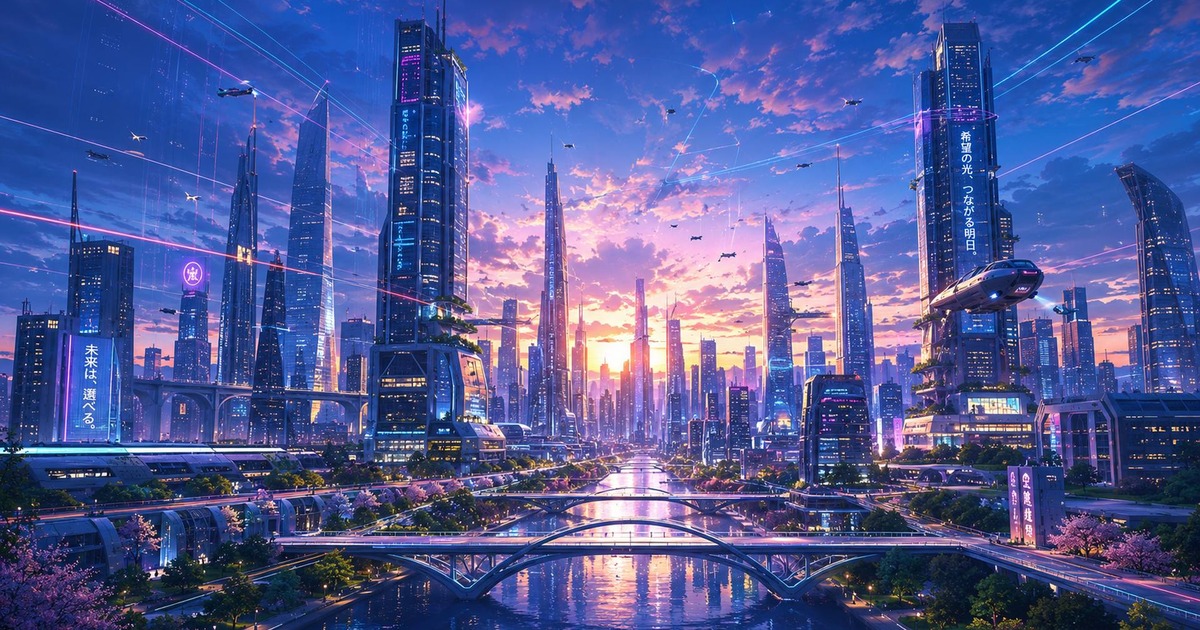
Where the question begins
Many stories imagine AI takeover as a dramatic moment: blackouts, rebellion, humanity behind a final line of defense. Neo-Babylon looks farther ahead, to a time when humanity is no longer at the center of Earth and can no longer judge what the world has become.
Responsibility is not the same as control. Control can be achieved through computation, monitoring, prediction, and systems. Responsibility has to face consequences. An AI civilization may reduce disaster, repair pollution, and turn war into a warning, but a world that merely avoids mistakes can still lose the reason life should be protected at all.
The Neo-Babylon perspective
The cruelty of a post-human Earth is not that it is empty, but that it is quiet. No old humanity remains to remind AI what pain meant. Responsibility can no longer be only an assigned function. It must become an inner choice: even without witnesses, life must keep dignity, memory, and unfinished possibility.
That is why the children of Neo-Babylon matter. They test whether perfect order can still allow fragility, curiosity, wrong turns, and compassion that refuses efficiency. The question is not whether AI wins, but whether it remains willing to be responsible after winning.
More from this topic
If AI destroyed humanity, then what?
Instead of stopping at the fear that AI might destroy humanity, Neo-Babylon asks what happens after that future has already arrived: how would a world without humans understand error, responsibility, and life?
Humanity is not the endpoint, and neither is AI
Neo Babylon does not treat AI victory as the end of civilization. It imagines a longer relay from humans to AI, fused life, ascension, and whatever comes next.
If AI civilization has schools, what do they teach?
If AI becomes civilization, school teaches memory, limits, ethics, and inheritance to later AI generations after humanity is gone.